
Published July 13, 2026 · 6 min read · By Parker Plumbing Pros
Your water heater is one of the hardest-working and most expensive appliances in your home, and Colorado's hard water is quietly working against it. A little annual maintenance beats the scale that shortens tank life and drives up your energy bill. Here's what that maintenance looks like.
Why hard water is the villain
Front Range water is mineral-rich, and as it heats in your tank, those minerals precipitate out as sediment and scale. That layer settles at the bottom of a tank, insulating the water from the burner or element — so the heater works harder, uses more energy, and delivers less hot water. The popping and rumbling of an older heater is the sound of water bubbling through that sediment.
The annual maintenance checklist
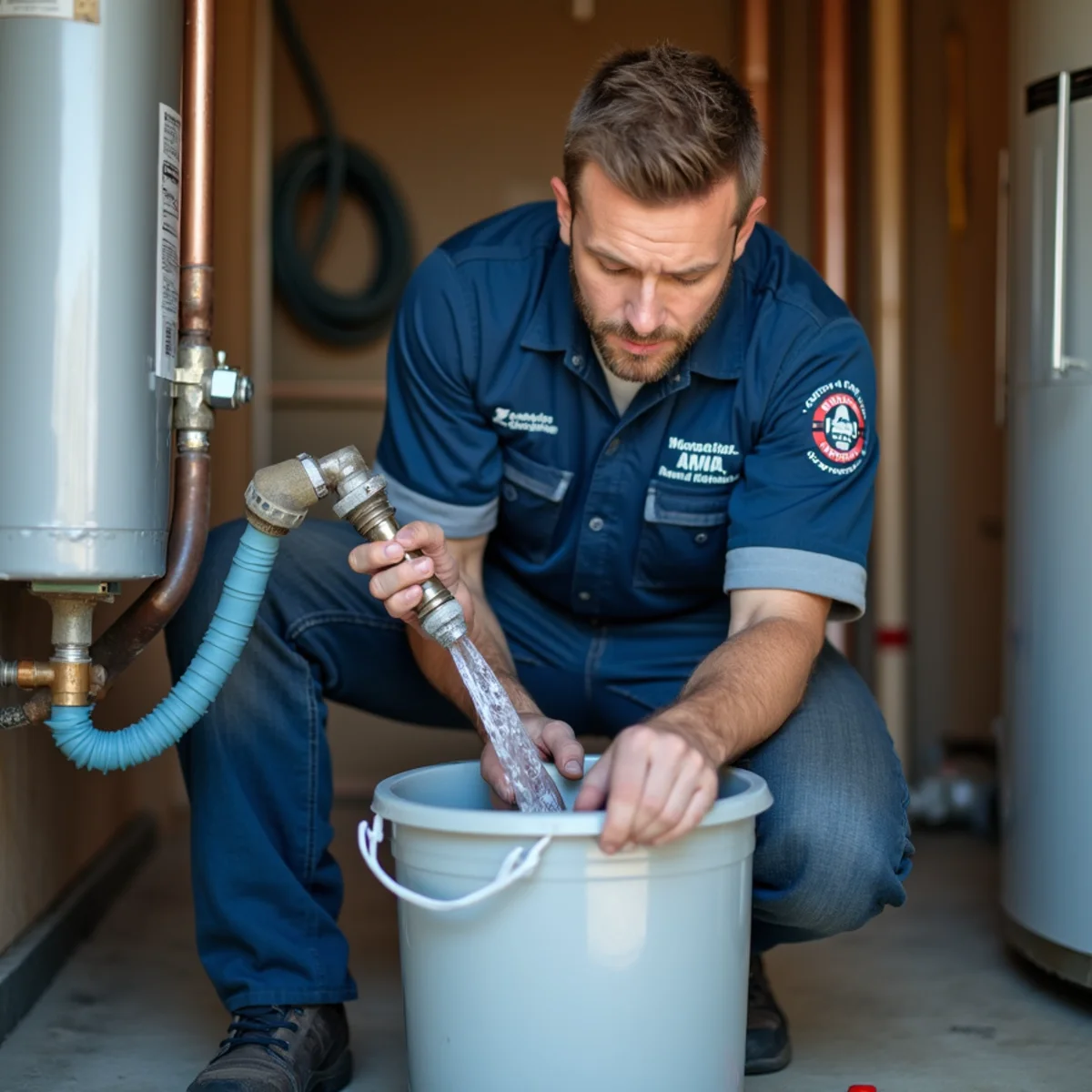
- Flush the tank to remove sediment and scale that has settled at the bottom.
- Test the temperature-and-pressure (T&P) relief valve — a critical safety component.
- Inspect the anode rod (where applicable); a depleted rod means the tank starts corroding.
- Check connections, the shutoff valve, and the expansion tank for leaks or corrosion.
- Verify the temperature setting is efficient and safe.
Don't forget tankless
Tankless units are just as vulnerable to scale — arguably more so, because it collects on the heat exchanger and chokes the flow. On our hard water, a tankless heater needs an annual descaling flush to maintain rated performance, and skipping it can void the manufacturer's warranty. If you have tankless, put the flush on the calendar.
The softener question
Maintenance manages scale; a water softener prevents it at the source. If you're constantly fighting scale or replacing components early, a softener (benchmarked at $1,200–$3,000) protects not just the water heater but every fixture and appliance downstream. It's often the smart companion to a new water-heater install.
What maintenance saves you
A neglected, scaled-up heater fails years earlier than a maintained one — and a replacement runs $1,200–$3,000 for a tank or $2,500–$5,500 for tankless. Annual maintenance is a fraction of that, and it keeps efficiency (and your energy bill) where it should be. In communities like Highlands Ranch, where builder-grade heaters age as a batch, maintenance is what buys you extra years before replacement.
Signs you're overdue
- Rumbling or popping noises (sediment buildup).
- Hot water that runs out faster than it used to.
- Rusty or cloudy hot water.
- It's been more than a year since the tank was flushed.
Serving Highlands Ranch and all of Douglas County, we flush tanks, service tankless units, and install softeners to keep scale from stealing years off your water heater. Schedule your annual maintenance — call us.
How often to flush — it depends on your water
The generic advice is 'flush your water heater once a year,' and for most Front Range homes that's right. But the honest answer depends on your water and whether you have a softener. On Parker's hard water with no softener, sediment builds fast, and a heavily used tank can benefit from a flush every six to nine months — you'll know it's overdue when you hear rumbling or popping, which is water bubbling up through the sediment layer. With a softener protecting the tank, once a year is usually plenty.
Tankless units are less forgiving. Scale collects on the heat exchanger and chokes the flow, so an annual descaling flush isn't optional here — skipping it can void the manufacturer's warranty and slowly starve your hot water. If you have tankless, put the flush on the calendar the same way you would an oil change.
Related plumbing services
Frequently asked questions
At least once a year on our hard water — more often if you have no softener and notice heavy sediment. Tankless units need an annual descaling flush to maintain performance and warranty.