
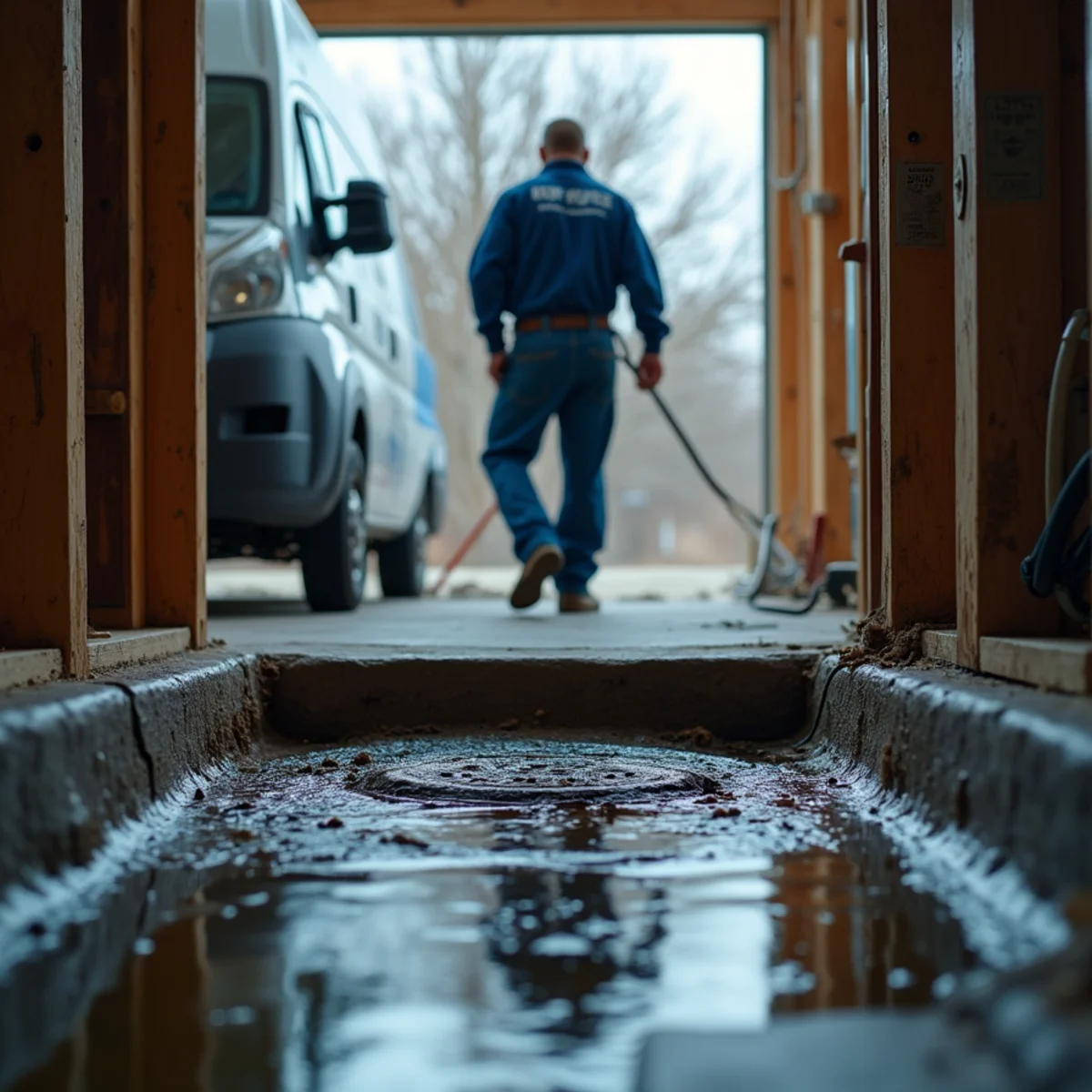
Published January 26, 2026 · 6 min read · By Parker Plumbing Pros
A sewer backup is different from a slow drain. When wastewater rises through a floor drain or multiple fixtures back up at once, you're dealing with contaminated water and a main-line problem — not a single clog. Here's how to handle it safely and get to the actual cause.
First: stop adding water and keep people away
- Stop using any fixtures that may discharge into the blocked line — every flush and drain makes it worse.
- Keep children and pets away from the sewage and avoid unnecessary contact.
- Do not pour household chemicals or drain cleaner into a backed-up drain.
- Treat all sewage as contaminated water and protect yourself before any cleanup.
Record what's happening
Note which fixtures backed up and whether one room or the whole property is affected. Multiple slow drains, gurgling, sewage odor, and backups that return after rain all point toward the main line or sewer lateral rather than one fixture.
Why Douglas County sewers back up
Douglas County's expansive clay soil swells when wet and shrinks when dry, and that movement stresses buried sewer lines and separates connections. Add mature tree roots finding their way into joints, plus spring snowmelt and heavy rain, and you get recurring seasonal backups — especially in older neighborhoods like Cottonwood with aging clay laterals.
When to ask for a camera inspection
If clearing only gives temporary relief, or backups recur, insist on a video camera inspection before paying for repeated clearing. A camera places a small video head inside the line so the plumber can see whether roots, settling, a separated joint, or a damaged lateral is the cause. Published benchmarks place camera work around $200–$400, and it's the step that turns guessing into a real diagnosis.
Repair options once you know the cause
Depending on what the camera shows, the fix might be a spot repair, trenchless lining, or excavation and replacement. These methods address different pipe conditions, so a good plumber compares them in writing before recommending one. Parker-area benchmarks: spot repair $1,500–$4,000, trenchless lining $4,000–$10,000, and excavation or replacement $3,000–$15,000+.
Separate plumbing from restoration
If sewage reached finished spaces, keep the plumbing diagnosis separate from water-damage restoration, and ask who will document moisture readings, drying actions, and removed materials. Professional restoration follows ANSI/IICRC S500 procedures — ordinary plumbing cleanup should not be described as mold remediation.
If your sewer is backing up now, stop using water and call our 24/7 line. We serve all of Douglas County and start every recurring backup with the camera, not a guess.
Why we camera the line before we clear it again
The most expensive way to deal with a recurring sewer backup is to keep paying to clear it. Every clearing buys a few weeks, the line backs up again, and you've spent more than a diagnosis would have cost with nothing to show for it. A camera inspection ends the guessing: we see whether roots are entering at a joint, whether a section has bellied into a low spot that collects waste, or whether the lateral has cracked or separated from clay movement.
That's the honest tradeoff. A one-time clearing is cheaper today; a camera inspection costs a bit more up front but tells you whether you're facing a $250 clearing or a repair — and lets you compare a spot repair, trenchless lining, and excavation on the evidence. For a line that's backed up more than once, the camera almost always saves money over the next year.
Related plumbing services
Frequently asked questions
It can be — though the clog can also be local. Multiple slow fixtures, gurgling, seasonal recurrence, root suspicion, and wastewater returning all support a camera inspection to find the real cause.