
Published June 15, 2026 · 7 min read · By Parker Plumbing Pros
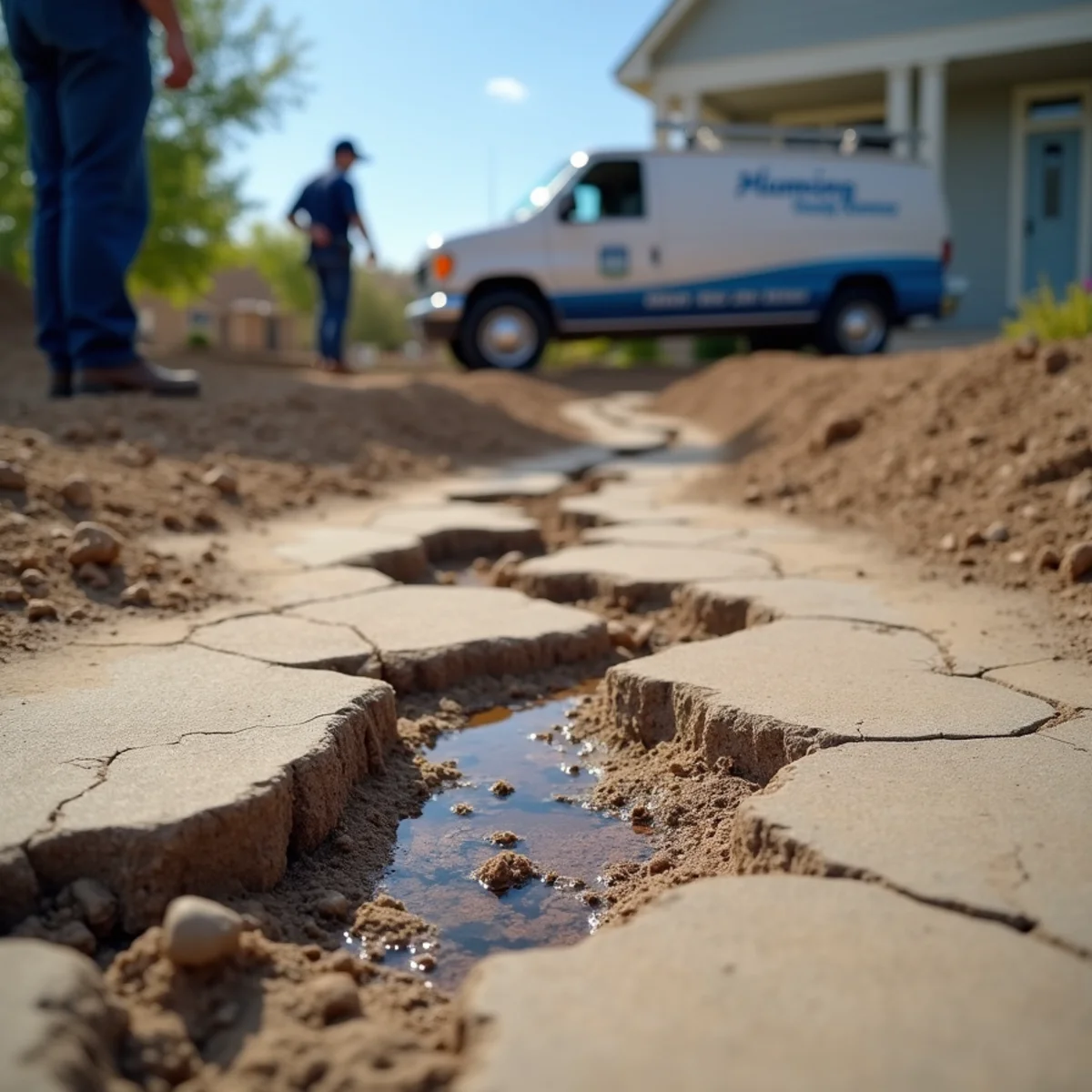
If you own a home along the Front Range, expansive clay soil is working under your foundation whether you think about it or not. It's one of the leading reasons Colorado homes develop slab leaks — and understanding the mechanism helps you catch a problem early instead of after it undermines your slab.
How expansive clay works
Expansive clay soil swells when it absorbs water and shrinks when it dries out. The Colorado Geological Survey documents how this repeated movement can stress foundations, pipelines, and sewer lines. Under a concrete slab, that means the supply and drain lines running through and beneath the slab are subjected to shifting forces they weren't meant to endure.
Why it causes slab leaks
As the clay swells and shrinks with our wet-then-dry seasonal cycles, it can flex pipe joints, separate connections, and crack supply lines under the slab. A slab leak is a water line leaking beneath the concrete — hidden, persistent, and capable of spiking your water bill and undermining the foundation if left alone.
The warning signs of a slab leak
- A warm or hot spot on the floor — a hot-water line leaking under the slab.
- The sound of running water with everything shut off.
- A water bill that climbed with no change in usage.
- Cracks in flooring or the foundation, or moisture seeping up.
- Low water pressure and a water meter that keeps moving.
- Musty smells or mold near the base of walls.
The newer-home surprise
Slab issues aren't just an old-home problem. Booming new subdivisions — Crystal Valley and The Meadows in Castle Rock, and new builds across Douglas County — sit on expansive clay, and slab movement can stress supply lines in homes only a few years old. New construction and settling homes present different clues than older subdivisions, so a shifting connection or recurring issue deserves inspection rather than repeated surface repairs.
Diagnosis before repair
Here's the key discipline: don't let anyone name clay movement as the cause without evidence. A slab leak should be pinpointed with electronic, acoustic, and pressure methods — no exploratory jackhammering — and a recurring sewer issue should be camera-inspected. Only then can you compare a spot repair, a reroute, or a repipe intelligently.
Your options once it's located
Depending on the leak location, pipe condition, and your foundation, the fix might be a targeted spot repair, rerouting the line to avoid the slab, or a repipe. We compare these in writing based on long-term value, and we document everything for your insurance claim.
Serving Castle Rock, Parker, and all of Douglas County, we pinpoint slab leaks precisely and confirm the cause before any concrete is opened. If you've got a warm floor or a mystery bill, call us.
Why brand-new homes get slab leaks too
Homeowners are often shocked when a house only a few years old develops a slab leak. The reason is the ground, not the age. Expansive clay swells and shrinks through every wet-then-dry cycle, and that movement doesn't wait for a home to get old — it works on the supply lines under a new slab from day one. Fast-growing subdivisions built on former ranchland along the Front Range are exactly where we see clay-driven slab stress in recent construction.
The practical takeaway is to watch for the early signs rather than assuming a new home is immune: a warm spot on the floor, the sound of running water with everything off, an unexplained jump in the water bill, or moisture wicking up a wall. Catching a slab leak early keeps it a targeted repair instead of a foundation problem — and we always confirm clay movement with evidence before naming it the cause.
Related plumbing services
Frequently asked questions
Yes. Expansive clay under newer subdivisions can stress supply lines within a few years of construction. A warm floor, running-water sounds, or an unexplained bill warrant a leak check regardless of the home's age.